
Under the overarching theme of "Post-Truth," World Philosophy Day 2017 addressed one of the most pressing phenomena of our time—an era in which objective facts carry less weight than emotions and personal beliefs, and media constructs increasingly blur the line between reality and fiction.
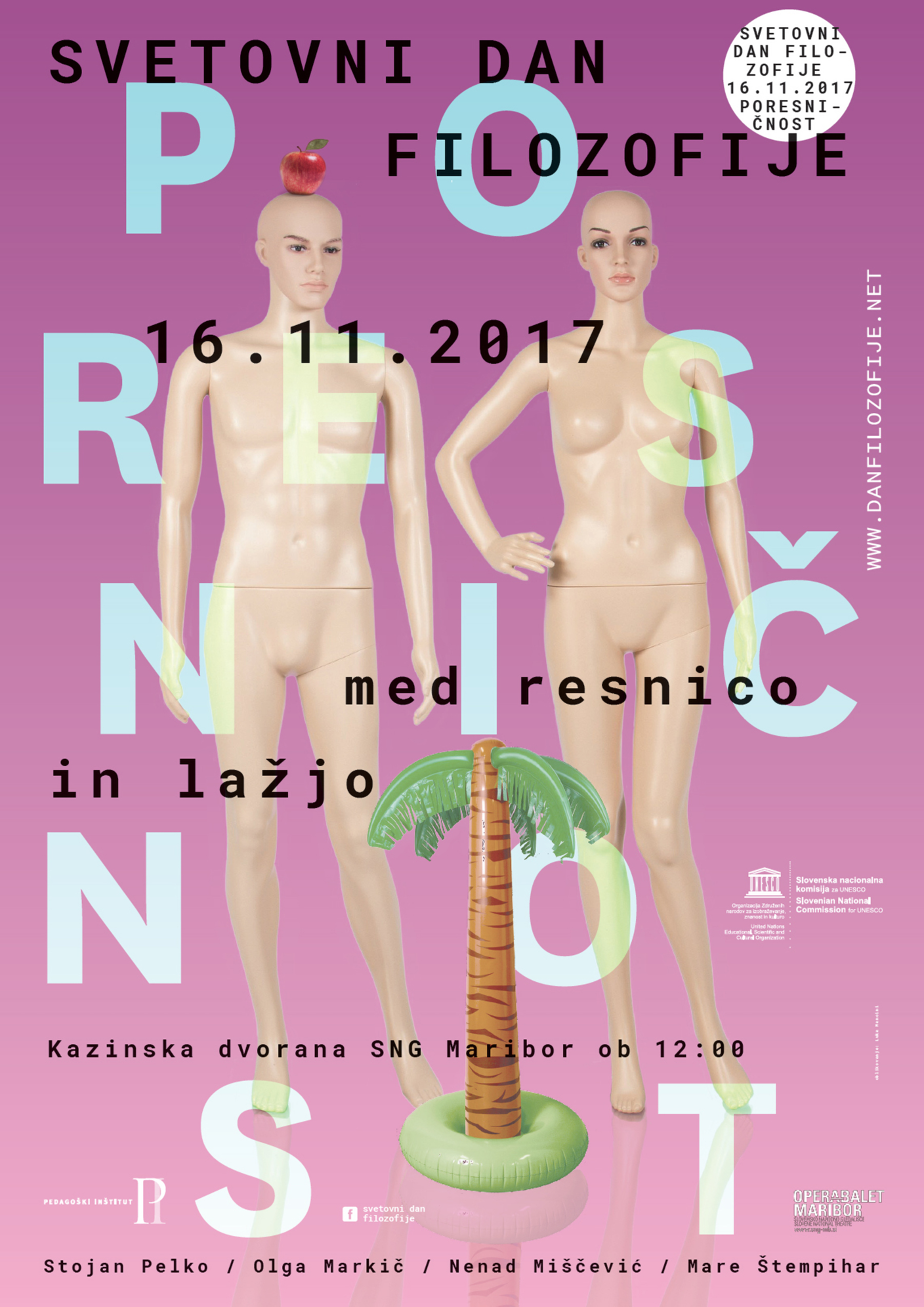
he visual solution and overall graphic identity of the event are based on a radical paraphrase of the biblical myth of Adam and Eve in Paradise. Instead of primordial humans, two expressionless, plastic store mannequins from department stores are highlighted as protagonists, alluding to the emptied, instant nature of contemporary consumer society. The key twist in the concept is represented by the Tree of Knowledge, which in this interpretation transforms into a cheap, inflatable plastic palm tree for pools. This ironic element clearly signals that true knowledge is no longer in focus in the world of post-truth; it has been replaced by instant simulacra and artificial environments. Through strong metaphors, the emerging visual language challenges the viewer to rethink the superficiality of information and truth in the digital era.
he visual solution and overall graphic identity of the event are based on a radical paraphrase of the biblical myth of Adam and Eve in Paradise. Instead of primordial humans, two expressionless, plastic store mannequins from department stores are highlighted as protagonists, alluding to the emptied, instant nature of contemporary consumer society. The key twist in the concept is represented by the Tree of Knowledge, which in this interpretation transforms into a cheap, inflatable plastic palm tree for pools. This ironic element clearly signals that true knowledge is no longer in focus in the world of post-truth; it has been replaced by instant simulacra and artificial environments. Through strong metaphors, the emerging visual language challenges the viewer to rethink the superficiality of information and truth in the digital era.